Have you just bought a used bike 400 km away and don’t feel like tackling the motorway in bad weather? Or are you moving house and your Honda Africa Twin needs to follow the removal van? Motorcycle transport is now a standard solution for those who don’t want to risk road wear, fatigue or accidents, but it must be organised carefully: a bike isn’t a parcel and it’s not a car either.
In this practical 2025 guide I explain everything you need to know, with real examples, to ship your motorcycle (or scooter) in Italy or Europe without surprises.
Why Many People Now Choose to Ship Their Bike Instead of Riding It
The most common situations are these:
- Buying a used bike far away (e.g. a Ducati Monster found in Naples while you live in Turin)
- Relocating to another region (the bike follows the removal lorry without extra kilometres)
- Taking part in races or rallies (arrive fresh and without fatigue)
- Holiday in Sardinia or Sicily without boarding the ferry
- Bike not drivable after an accident or long stationary period
In all these cases driving isn’t the only option: shipping the bike is often safer, faster and ultimately cheaper.
Motorcycle Transport Options: Which One to Choose
Today there are mainly three ways to ship a motorcycle or scooter.
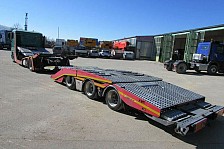
Dedicated van or equipped truck The bike is loaded alone onto a closed van or a truck with hydraulic tail-lift. It’s the most protected and flexible solution, ideal for valuable bikes or when you want to avoid any exposure to the elements.
Car carrier / combined transport The bike travels with other cars or bikes on an open (or rarely closed) car carrier. It costs less, but is exposed to dust, temperature changes and minor impacts. Perfect for “normal” bikes and domestic routes.
Courier or pallet (only for light scooters) Some couriers accept scooters up to 150-200 kg on a pallet, but it’s rare and often not cost-effective for proper motorcycles.
Dedicated Van vs Car Carrier: Practical Comparison
| Method | When it makes sense | Pros | Cons | Indicative cost (2025 examples) |
|---|---|---|---|---|
| Dedicated van/truck | Valuable bike, long distance, bad weather | Maximum protection, precise pickup/delivery | More expensive, limited availability | €450–1,200 (e.g. Milan–Bari) |
| Open car carrier | Used/medium-displacement bike, average budget | Affordable, good times | Exposed to dust/rain, shared load | €250–650 (e.g. Rome–Venice) |
| Enclosed car carrier | New or premium bike | Almost total protection | Rare, high cost | +40–70% vs open |
| Courier pallet | Light scooter <150 kg | Cheap for small vehicles | Few couriers accept it, risk of damage | €150–400 (scooters only) |
Realistic Delivery Times
- Short routes (within 400 km): 1–3 working days
- Medium routes (e.g. North–Centre): 3–5 days
- Long routes (North–South or islands): 5–9 days
What speeds things up: drivable bike, easy address, non-summer period. What slows things down: non-drivable bike (needs tail-lift/forklift), ZTL zones, summer holidays, bad weather.
How Much Does Motorcycle Transport Cost: What Really Affects the Price
The price depends on:
- Actual distance (not as the crow flies)
- Weight and dimensions (engine size, handlebar height, side bags)
- Condition (drivable or not)
- Type of transport (van vs car carrier)
- Pickup/delivery accessibility
- Extra insurance or urgency
Indicative examples (2025, rough order of magnitude):
- Milan–Bologna 125 cc scooter drivable: €200–400
- Rome–Palermo Africa Twin with side bags: €550–950
- Turin–Cagliari Ducati Multistrada (van): €900–1,600
Always compare multiple quotes: the difference can be 30–40%.
Preparing the Motorcycle Before Pickup: Printable Checklist
Before the transporter arrives, do these checks:
- Empty top case, side bags and under-seat compartment (no personal items)
- Leave fuel tank almost empty (max 1/4 for fire safety)
- Inflate tyres to correct pressure (avoids deformation)
- Secure mirrors, handguards, removable windscreen
- Protect delicate parts (handle grips, indicators, exhaust) with bubble wrap
- Take complete photos (all sides + details of existing damage)
- Prepare spare keys and registration document
- Disable alarm if present
- Clean number plate and lights (easier identification)
- Immediately report if the bike won’t start or has mechanical issues
What You Can (and Cannot) Leave on the Motorcycle
Iron rule: nothing valuable and nothing loose.
You can leave:
- Standard tool kit bag
- Disc lock (if secured)
- Light bike cover (well tied)
Never leave:
- Helmet, jacket, gloves
- Documents, wallet, house keys
- Removable side bags
- Phone in the top case
- Extra liquids (chain lube, oil)
Any lost or damaged item is not covered by carrier insurance.
Insurance and Liability: What It Covers and What It Doesn’t
Every serious transporter includes carrier insurance (damage during transit). Always ask:
- Coverage limit per vehicle (usually €30,000–100,000)
- Typical exclusions (pre-existing scratches, tyre wear, loose parts)
- Procedure for contesting damage (pre-pickup photos + delivery report)
For bikes over €10,000–15,000 consider an all-risk top-up policy (extra cost 5–15%).
Common Mistakes to Avoid When Shipping a Motorcycle
- Not declaring that the bike won’t start (refusal at pickup)
- Leaving helmet or bag in the top case
- Giving an address in a ZTL zone or narrow courtyard
- Expecting delivery in 24 hours like a parcel
- Choosing only the lowest price without reviews
- Not taking photos before loading
- Forgetting to inflate the tyres
How Trasportami Works to Ship Your Motorcycle
- Enter route, motorcycle/scooter model, engine size and whether it’s drivable.
- Compare real quotes from two-wheel transport specialists.
- Choose the best offer, prepare the bike and follow the tracking.
To organise your motorcycle transport, enter your details on Trasportami: in just a few minutes you’ll have clear offers and can ship your two-wheeler with complete peace of mind.
FAQ – Frequently Asked Questions about Motorcycle Transport
How long does it take to ship a motorcycle from North to South? Usually 4–8 working days, depending on route and service type.
Can I ship a non-drivable motorcycle? Yes, but declare it immediately: tail-lift or forklift is needed and the cost increases.
What happens if I leave the helmet in the top case? Risk of theft/damage not covered by insurance; better to remove it.
Is a car carrier safe for a valuable motorcycle? For bikes over €10,000 a dedicated van or enclosed carrier is better.
Do I have to empty the scooter completely? Yes, top case and under-seat compartment must be empty to avoid issues.
Is motorcycle transport to Europe possible? Yes, with dedicated van or car carrier; times and costs increase.
How much does it cost to ship a 125 cc scooter from Milan to Rome? Roughly €250–550, depending on the service chosen.
How do you contest any damage to the motorcycle? With pre-pickup photos + delivery report; insurance steps in within the coverage limits.